
Sleeve Gástrico o Manga Gástrica por Laparoscopia
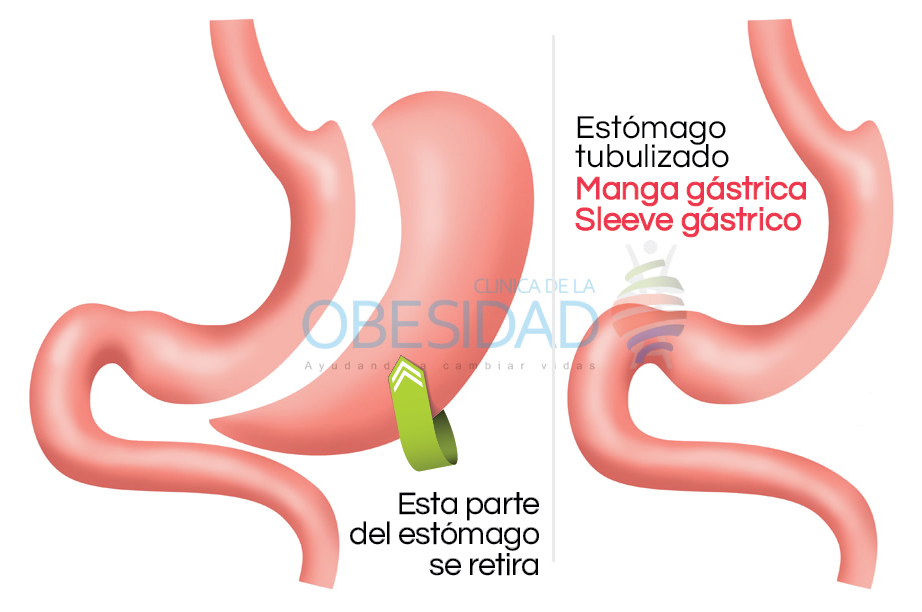
Esta cirugía consiste en una reducción del tamaño del estómago, convirtiéndolo en un tubo delgado y largo, como una banana. La cirugía se realiza utilizando técnica laparoscópica (cirugía mínimamente invasiva), con anestesia general, y tiene una duración aproximada de 60-75 minutos. El paciente permanece hospitalizado durante una noche, y sale de la hospitalización al día siguiente a la cirugía, con una dieta líquida durante los primeros días, y un avance progresivo de la dieta hasta llegar a una dieta de consistencia normal pero ya en porciones pequeñas. Para lograr esto, se introduce al estómago una sonda de calibración de un tamaño ya definido, y se procede a hacer un corte con disparos secuenciales de sutura mecánica (pequeñas grapas de titanio de grado médico), dejando un tubo del tamaño de la sonda de calibración y removiendo el estómago redundante. Se retira aproximadamente el 80% del estómago, sin embargo, lo importante es el tamaño del estómago que se deja y no el porcentaje de estómago que se retira.
La parte que se corta, debe ser retirada del abdomen al final de la cirugía, utilizando una de las pequeñas incisiones, usualmente la incisión ubicada en la línea media del abdomen, en el ombligo o por encima de este. Esta reducción del tamaño del estómago hará que el paciente se sienta satisfecho con porciones pequeñas de alimentos sólidos (una alimentación normal, pero de porciones reducidas), lo cual conducirá a una pérdida de peso muy significativa. Adicional a la sensación de saciedad o llenura temprana con porciones pequeñas de alimentos, la mayoría de los pacientes también experimentan una gran pérdida del apetito durante el primer año, debido a una reducción de algunas hormonas en la sangre que regulan la sensación de hambre (la más conocida se llama Ghrelina) . Esto usualmente hará que el proceso de adaptación al cambio de dieta y de alimentación sea más fácil para el paciente dada la pérdida significativa del apetito (pérdida de la sensación de hambre) y la saciedad temprana con porciones pequeñas, durante este primer año.
Aproximadamente un año después de la cirugía, la mayoría de los pacientes vuelven a tener un apetito normal, como antes del procedimiento, pero la sensación de satisfacción temprana con porciones pequeñas de alimentos va a permanecer en el tiempo, lo que facilitará el mantenimiento del peso perdido a largo plazo.
En esta cirugía no se altera la absorción de los alimentos, sólo el tamaño de las porciones. Se recomienda el uso de suplementos de vitaminas durante los primeros meses y si los exámenes de control no muestran alteraciones, se puede suspender el uso de multivitaminas. En el período postoperatorio se hacen controles con exámenes de laboratorio periódicamente y si es necesaria alguna suplementación de mayor duración o inclusive permanente, se adiciona según la necesidad de cada paciente. Se recomienda hacer chequeos de laboratorio anualmente para evaluar la condición nutricional del paciente
Como es la Cirugía de Manga Gástrica?
En esta cirugía se hace una reducción de la capacidad del estómago, dándole una forma de tubo delgado ó manga de poca capacidad. Para lograrlo, se retira una porcentaje alto del estómago (aproximadamente el 80%, aunque lo importante no es el porcentaje que se retira sino el tamaño del estómago tubulizado que se deja). Esto hace que el paciente se sienta satisfecho con porciones pequeñas de alimentos y que pierda peso de manera significativa. Adicional a la sensación de saciedad con porciones pequeñas, un efecto importante de este procedimiento, es debido al impacto que tiene la cirugía en algunas hormonas del intestino que regulan varios factores como el hambre, la sensación de saciedad y el control de los niveles de azúcar en la sangre. Esto significa que además de la sensación de satisfacción o saciedad con porciones pequeñas, la mayoría de los pacientes también experimentan una pérdida significativa del apetito y de la sensación de hambre especialmente durante el primer año después de la operación. La cirugía se hace utilizando técnica laparoscópica, es decir, pequeñas incisiones en la parte alta del abdomen, y es necesario grapar y cortar parte del estómago para reducirlo de tamaño, convirtiéndolo en un tubo delgado, en forma de banana. En esta operación no es necesario cortar ni suturar el intestino, solamente se modifica el estómago.
Esta cirugía es hoy en día la más utilizada para el manejo de la obesidad en la gran mayoría de los pacientes, pues se puede lograr una pérdida de peso similar a lo obtenido con la cirugía de Bypass gástrico, cuando se realiza con las condiciones técnicas adecuadas (hay una amplia variabilidad en la forma como los cirujanos realizan la manga gástrica), siendo una operación con menos cambios anatómicos (no se toca el intestino ni se modifica la absorción de los alimentos). Esta operación permite a los pacientes un buen control y remisión de la diabetes, similar a lo observado con la cirugía de Bypass gástrico. Los resultados son muy superiores a los obtenidos con la Banda Gástrica (una cirugía muy poco utilizada hoy en día en el mundo), con menos molestias postoperatorias y mejor calidad de vida. Es una cirugía muy versátil, ofrece excelentes resultados en términos de pérdida de peso, calidad de vida y buen control de problemas metabólicos como diabetes, hipertensión, apnea del sueño y problemas articulares entre otros. Permite la adición o revisión a otros procedimientos en caso de pérdida de peso insuficiente o reganancia de peso. Es una cirugía que puede realizarse con seguridad en pacientes jóvenes (adolescentes) y pacientes mayores, al igual que en pacientes que deben tomar medicamentos múltiples por otros problemas de salud. La cirugía de sleeve gástrico es la operación bariátrica realizada con mayor frecuencia hoy el día en el mundo para el manejo de la obesidad.
Variabilidad en los resultados de la cirugía de Manga Gástrica
La cirugía de Manga gástrica puede tener variaciones importantes en la forma como la realizan diferentes cirujanos (diámetro de la sonda de calibración, resección completa o incompleta del fundus, distancia del píloro al sitio de inicio del corte y grapado, entre otros). Para explicarlo de una manera fácil de entender, al realizar una manga gástrica, el cirujano está transformando el estómago, que es una bolsa amplia, en un tubo delgado. Este tubo puede variar en su diámetro, longitud y regularidad de acuerdo al cirujano que la realice, lo que puede llevar a diferentes resultados en términos de pérdida de peso y de mantenimiento del peso perdido a largo plazo. En otras palabras, esta variabilidad en la técnica puede tener como resultado, pérdidas de peso variables. La técnica utilizada por nosotros en la Clínica de la Obesidad para la realización de la cirugía de Sleeve gástrico o Manga gástrica, ha permitido a nuestros pacientes lograr pérdidas de peso similares a las logradas con la cirugía de Bypass gástrico. Estos resultados han sido demostrados de manera consistente cuando se compara la pérdida de peso obtenida por nuestros pacientes con manga gástrica, con los pacientes sometidos a bypass gástrico por otros grupos de cirugía bariátrica en Colombia y Latinoamérica. Esto ha hecho que hoy en día la cirugía bariátrica más recomendada para la mayoría de nuestros pacientes sea la Manga gástrica por Laparoscopia, por implicar menores cambios anatómicos y ofrecer los mismos resultados de pérdida de peso y mantenimiento del peso a largo plazo que el bypass gástrico por laparoscopia. Adicionalmente, en nuestra técnica de sleeve gástrico o manga gástrica se incluye la realización de un procedimiento tendiente a evitar o mejorar los síntomas de reflujo gastroesofágico, incluyendo la corrección de hernia hiatal si está presente. Esto ha demostrado un buen control de los síntomas de reflujo previos y una baja incidencia de síntomas de reflujo molesto en la mayoría de nuestros pacientes después de la cirugía. Por esta razón, no consideramos que la presencia de síntomas o signos de reflujo sea necesariamente una contraindicación para la realización de una manga gástrica, pues de rutina se adiciona un procedimiento tendiente a evitar o controlar el reflujo durante la misma cirugía.
Video de la Cirugía de Manga Gástrica por Laparoscopia
Manga gástrica, técnica en la Clínica de la Obesidad
Ventajas del Sleeve Gástrico o Manga gástrica
Es una cirugía mínimamente invasiva (pequeñas incisiones en el abdomen, sin hacer una incisión grande), se considera exitosa cuando los pacientes con masa corporal de 40 o menos logran perder al menos un 60-70%% del exceso de peso (en pacientes con índice de masa corporal superior a 50 kg/m² se considera la cirugía exitosa si la pérdida de peso alcanza a ser del 50% del exceso de peso), sin embargo, con frecuencia nuestros pacientes de Sleeve gástrico pierden hasta el 100% del exceso de peso, logrando un peso completamente normal para su estatura. Esto es muy superior a lo observado con cirugías como la Banda Gástrica, sin las molestias que esta frecuentemente produce, y es similar a la pérdida de peso que se logra con la cirugía de Bypass gástrico, razón por la cual la cirugía de Sleeve gástrico es hoy en día la cirugía bariátrica más recomendada para la mayoría de los pacientes con obesidad y es la cirugía que más se realiza en el mundo en este momento. Es importante recordar que hay una amplia variabilidad en la forma como se realiza la cirugía de Manga gástrica por diferentes cirujanos. Con la técnica utilizada por nuestro grupo, los resultados con la manga gástrica han demostrado una pérdida de peso similar a la obtenida con la cirugía de Bypass gástrico.
No es frecuente el Síndrome de Dumping (sin embargo, si puede presentarse en algunos casos). No es necesario tomar suplementos vitamínicos y de minerales en forma permanente después de la cirugía, si no se identifican deficiencias en los exámenes de sangre que se recomienda hacer de rutina durante el período de seguimiento posterior a la operación. Tiene menos riesgo de deficiencias nutricionales que el Bypass gástrico y otras cirugías bariátricas de mayor complejidad. Esta operación es muy útil para el manejo de la obesidad mórbida, y en pacientes con niveles de IMC altos (Indice de Masa Corporal por encima de 50 kg/m²), puede producir pérdidas de peso de un 50% o más del exceso de peso, similar a lo producido por el Bypass gástrico, con la ventaja de que a la manga gástrica puede adicionársele un procedimiento de Switch Duodenal de una anastomosis, para producir pérdidas de peso aún mayores (esto puede hacerse en el mismo momento que se realiza la manga gástrica o en un segundo procedimiento, meses o años después, si fuese necesario o si el paciente lo desea). Es importante que el paciente entienda que la decisión sobre el tipo de cirugía bariátrica a realizar debe tomarse en conjunto entre el médico y el paciente luego de un proceso de información adecuado, que incluya la posibilidad de que el paciente haga preguntas y resuelva sus dudas sobre las ventajas y las implicaciones a corto y largo plazo de cada procedimiento. El tipo de cirugía bariátrica a hacerse en un paciente no debe ser impuesto por el cirujano, es una decisión del paciente luego de un proceso de información amplio y completo, que incluye la posibilidad de resolver todas las preguntas que tenga el paciente sobre la cirugía, el estilo de vida que se debe llevar para tener buena pérdida de peso y buena condición de salud posterior y las implicaciones que tiene cada operación en el corto, mediano y largo plazo.
Anotaciones sobre la cirugía de Sleeve Gástrico ó Manga Gástrica
Existe la posibilidad de que en algún momento sea necesario suministrar a los pacientes vitamina B12, hierro o algún otro suplemento o vitamina si los niveles de estos micronutrientes se observan bajos en las mediciones que se hacen antes o después de la cirugía, sin embargo, la mayoría de los pacientes no lo requieren. Con frecuencia puede recomendarse el uso de multivitaminas tomadas en forma de tabletas durante los primeros meses después de la cirugía, mientras el paciente se adapta a su nueva alimentación, sin embargo, no es indispensable tomar estos suplementos en forma permanente como es el caso con otras cirugías bariátricas. En esta cirugía es necesario grapar y cortar el estómago. Adicional al grapado, siempre hacemos un refuerzo de la línea de grapado con una sutura manual. Con el paso del tiempo, existe la posibilidad de que algunos pacientes puedan presentar aumento de su capacidad gástrica y tener aumento de peso si no se siguen las recomendaciones de la nutricionista sobre cambio de hábitos alimentarios. Se ha identificado que la causa más frecuente de reganancia de peso en pacientes con cirugía bariátrica es el consumo frecuente de alimentos con azúcar (dulces en general) y el consumo frecuente o abundante de licor. No es frecuente que se presente dilatación progresiva del estómago hasta volver a una capacidad normal. La restricción en el tamaño de las porciones de alimentos debe ser permanente. El consumo frecuente de alimentos que contienen azúcar y el consumo frecuente de licor no dilatan el estómago, estos alimentos se absorben con facilidad y no dan sensación de saciedad o llenura temprana, por lo tanto, pueden llevar a reganancia de peso, sin observarse una dilatación o crecimiento del estómago.
En casos en que la ganancia de peso sea insuficienteo si se presenta reganancia de peso significativa luego de un tiempo, el procedimiento de Sleeve gástrico o Manga gástrica puede revisarse, realizando nuevamente un recorte del exceso de estómago si se encuentra un estómago amplio, o se puede adicionar un procedimiento de Switch Duodenal ( llamado Switch duodenal de una anastomosis, tipo SADIS), en el cual se disminuye la absorción de los alimentos, logrando nuevamente buena pérdida de peso.
Esta cirugía implica algunos riesgos en su realización, como cualquier otra operación, sin embargo, se considera que los riesgos son en general bajos. Es importante discutir con el cirujano los riesgos que implica el procedimiento en cada paciente según su condición. Existe un riesgo bajo de una filtración en el sitio donde se hace el corte y grapado del estómago. En general, los beneficios del Sleeve Gástrico, también llamado Manga gástrica, superan ampliamente los riesgos. Se considera que una cirugía de sleeve gástrico tiene el mismo riesgo que una cirugía de Colecistectomía laparoscópica o extracción de la vesícula, que es una cirugía realizada con mucha frecuencia hoy en día.
Existen estudios comparando los riesgos de la cirugía bariátrica con los riesgos que representa la obesidad y se ha demostrado que es más riesgoso permanecer con obesidad que hacerse una cirugía bariátrica. En otras palabras, es más alto el riesgo de enfermar y morir prematuramente si un paciente obeso permanece con su obesidad por largo tiempo. Cuando un paciente con obesidad severa o mórbida se somete a cirugía bariátrica, su riesgo de enfermedades metabólicas y cardiovasculares se reduce notablemente y se prolonga su expectativa de vida, es decir, que muy probablemente aumentará su sobrevida en el tiempo, con una mejor salud y mejor calidad de vida.
Si desea conocer la respuesta a preguntas frecuentes que hacen los pacientes con obesidad antes y después de una cirugía bariátrica, lo invitamos a visitar nuestra sesión de videos, donde encontrará información sobre muchos temas relacionados con este tratamiento.
Sleeve Gástrico vs. Bypass gástrico?
Esta es una duda o inquietud frecuente entre los pacientes obesos que están buscando una solución para su problema de exceso de peso. En términos generales ambas cirugías representan una buena opción para el manejo de la obesidad, independiente de la severidad (no es correcta la afirmación de que el bypass sea una cirugía para los obesos más severos y el sleeve para los menos obesos). Ambas cirugías pueden conducir al paciente a una gran pérdida de peso si el paciente sigue las recomendaciones nutricionales y modifica algunos hábitos alimentarios. Es particularmente importante entender que para que una cirugía bariátrica funcione de manera adecuada y conduzca al paciente a una gran pérdida de peso, es necesario evitar al máximo el consumo de azúcar y de alcohol, independiente del tipo de cirugía que se realice. Esto hace referencia a evitar el consumo de helados, chocolate, bebidas dulces, sodas o gaseosas con azúcar, o alimentos con endulzantes naturales como la miel, panela, fructosa, agave, azúcar morena, etc.
Igualmente es importante evitar o aplazar el mayor tiempo posible el consumo de bebidas con alcohol. La razón de esta recomendación es que ninguna de las cirugías bariátricas tiene como propósito evitar que estos alimentos se absorban, por lo tanto, si el paciente los consume, estas calorías se van a absorber de manera normal y tienen un efecto de freno en la pérdida de peso, pudiendo afectar el resultado final del tratamiento. Esto es independiente del tipo de cirugía e independiente del tipo de dulce con calorías o del tipo de licor, todos pueden frenar la pérdida de peso si se consumen, especialmente si se hace tempranamente luego de la operación (durante el primer año). Esta recomendación de evitar el consumo de azúcar y licor es la misma si la cirugía es un Bypass gástrico, un sleeve gástrico o un Switch duodenal, en todos los casos debe evitarse para tener un buen resultado. Y de la misma manera, el consumo frecuente o abundante de azúcar o licor puede conducir a reganancia de peso con el paso del tiempo, en pacientes con cualquiera de estas cirugías.
La cirugía de Bypass gástrico es una operación en la que se reduce el tamaño del estómago para que las porciones de alimentos que consume el paciente sean de menor tamaño. Adicionalmente, se conecta ese pequeño estómago directamente al intestino delgado para reducir la absorción de los alimentos. Esta conexión del intestino al nuevo estómago lo que hace es desviar los alimentos de la ruta fisiológica normal hacia una nueva ruta, directamente a una parte más baja del intestino. En la realización de la cirugía de Bypass gástrico, no solo se reduce el estómago sino que se debe manipular el intestino delgado para cambiar la ruta normal de absorción. En la cirugía de Sleeve gástrico o Manga gástrica, solamente se reduce el tamaño del estómago, convirtiéndolo de una bolsa grande a un tubo delgado, sin manipular para nada el intestino delgado, lo que lo hace un procedimiento con menos cambios anatómicos, donde no se toca el intestino ni se altera la ruta fisiológica por la cual se absorben los alimentos. En la Manga gástrica o Sleeve gástrico se hacen menos cambios al sistema digestivo que en el Bypass gástrico, sin embargo, al retirar parte del estómago se logran cambios hormonales importantes que ayudan en el control del apetito y representan beneficios importantes en el control y prevención de enfermedades metabólicas como la Diabetes, entre otras.
Esta diferencia puede tener varias implicaciones desde el punto de vista fisiológico y de potencial de complicaciones a largo plazo. Cuando se altera la ruta normal de la absorción de los alimentos, es necesario que el paciente tome suplementos de vitaminas y calcio de manera permanente a partir de ese momento, esto aplica para pacientes sometidos a Bypass gástrico convencional, Switch duodenal o Bypass gástrico de una anastomosis – BAGUA o Mini Bypass gástrico-.
Esta alteración en la ruta de absorción de los nutrientes no se presenta en la cirugía de Sleeve gástrico o Manga gástrica, por lo tanto, no hay una razón fisiológica clara para recomendar de rutina la toma de suplementos de vitaminas y calcio de manera permanente. Los alimentos que el paciente consume van a tener una absorción normal al ingresar al duodeno, que es la primera parte del intestino delgado. De hecho, muchos grupos de cirugía bariátrica recomiendan que los pacientes sometidos a Sleeve gástrico tomen vitaminas solamente durante los primeros meses posteriores a la cirugía, mientras se logra avanzar a una dieta normal balanceada. En algunos casos puede ser necesaria la suplementación con vitaminas específicas a más largo plazo cuando se detectan deficiencias en los exámenes de control. En todos los pacientes que se someten a cirugía bariátrica es necesaria la realización de exámenes periódicos (anualmente) para medir niveles de vitaminas, calcio, hierro, etc, y asi poder definir si se requiere suplementación.
La cirugía de bypass gástrico ha tenido una rápida estandarización en su técnica. Esto quiere decir que es una cirugía que es realizada de manera muy similar por muchos cirujanos, logrando obtener resultados muy similares en términos de pérdida de peso, cuando se comparan los pacientes operados por varios grupos de cirugía bariátrica.
La cirugía de Sleeve gástrico o Manga gástrica por el contrario, es una cirugía que tiene una muy alta variabilidad en la forma como se realiza, dando lugar a resultados muy variables en términos de pérdida de peso de un cirujano a otro. Esto también tendrá un efecto sobre el mantenimiento del peso perdido en el largo plazo. Esto es importante entenderlo, pues es poco conocido por los pacientes y el público en general, quienes piensan que la manga gástrica es un procedimiento muy estándar, tal como lo es el Bypass gástrico, y esto no es cierto.
Una cirugía de manga gástrica consiste en convertir el estómago en un tubo delgado, pero el diámetro de ese tubo, la longitud y la uniformidad del tubo puede ser ampliamente variable, y esto es lo que explica la alta variabilidad en los resultados de pérdida de peso con una cirugía de manga gástrica realizada por diferentes cirujanos. Tiene el mismo nombre, pero la calidad y extensión de dicho “tubo” puede variar mucho, y esto hará que la pérdida de peso y el mantenimiento del peso perdido a largo plazo sea ampliamente variable.
En nuestra experiencia, la cirugía de Sleeve gástrico o Manga gástrica por laparoscopia, tal como la realizamos en la Clínica de la Obesidad, produce pérdidas de peso similares a lo observado con el Bypass gástrico, sin la necesidad de alterar la anatomía del intestino, solamente reduciendo el tamaño del estómago. Para lograr esto se requiere confeccionar una manga gástrica delgada, haciendo un tubo largo y regular, sin dejar sitios amplios que puedan dilatarse posteriormente y que puedan dar lugar a aumento notorio del tamaño de las porciones que consume el paciente.
Existe en Latinoamérica un grupo de cirujanos de alto volumen y experiencia llamado la Comunidad Latinoamericana de Calidad en Cirugía Bariátrica, de la cual hace parte la Clínica de la Obesidad. Este grupo de estudio reúne a cirujanos que realizan alto volumen de operaciones bariátricas y se ha dedicado al seguimiento y observación de los pacientes operados en Colombia y Latinoamérica en los últimos años, reportando los resultados de los diferentes grupos y comparándolos entre sí y con los resultados de los cirujanos en otros países de Latinoamérica. Según los resultados obtenidos por este grupo de calidad, y procesados por una empresa independiente de análisis estadístico, los pacientes sometidos a cirugía de Sleeve gástrico o Manga gástrica en la Clínica de la Obesidad, logran una pérdida de peso igual o mejor que los pacientes sometidos a Bypass gástrico en Colombia y en Latinoamérica. Esta es la razón por la cual consideramos que la cirugía de elección para la mayoría de los pacientes con obesidad debería ser la Manga gástrica o Sleeve gástrico por laparoscopia. Esta observación y comparación de grupos de pacientes nos ha permitido demostrar que la pérdida de peso con una cirugía de sleeve gástrico adecuada, es la misma que la que se presenta con un Bypass gástrico, siendo una cirugía de menor complejidad.
Otra situación que es importante conocer sobre las ventajas de la Manga gástrica o Sleeve gástrico sobre el Bypass gástrico tiene que ver con los riesgos que pueden presentarse en el mediano o largo plazo:
1.- El riesgo de complicaciones a largo plazo es menor en los pacientes sometidos a Sleeve gástrico que en los pacientes sometidos a Bypass gástrico. Si bien las complicaciones a largo plazo con el Bypass gástrico son bajas, en un paciente con bypass gástrico puede presentarse obstrucción intestinal por bridas (adherencias por la cirugía inicial), o hernia interna, una situación inherente a la manipulación del intestino para conectarlo al pequeño estómago, en la cual el intestino se obstruye al hacer una torsión debido a la nueva posición anatómica generada por la cirugía. (Se estima que los pacientes sometidos a Bypass gástrico tienen un riesgo de obstrucción intestinal de 1% por año). Igualmente existe un riesgo mayor de presentar trastornos nutricionales por la reducción en la absorción de los alimentos, de manera especial en la absorción de los micronutrientes ( calcio, hierro, vitaminas, minerales). En la cirugía de sleeve gástrico no se altera la capacidad de absorción, pues no se manipula el intestino ni se desvían los alimentos de la ruta natural, por lo tanto el riesgo de deficiencias nutricionales es notablemente menor. En ambos casos es necesario hacer mediciones de laboratorio al menos anuales para evaluar el estado nutricional.
2.- En caso de una pérdida de peso insuficiente o de reganancia de peso a largo plazo luego de cirugía bariátrica, hay más opciones de tratamiento que ofrecerle al paciente cuando se tiene una cirugía de Sleeve gástrico que cuando se tiene una cirugía de Bypass gástrico. En nuestra experiencia, la posibilidad de pérdida de peso insuficiente o de reganancia de peso con el sleeve gástrico es la misma que con el Bypass gástrico. En el caso de un paciente con sleeve gástrico previo que presente síntomas de intolerancia, reganancia de peso o pérdida de peso insuficiente, existe la posibilidad de rehacer el sleeve ( re-sleeve), convertirlo a un Bypass gástrico (convencional o de una anastomosis – BAGUA), o convertirlo a una cirugía de Switch Duodenal ( usualmente tipo SADIS – de una anastomosis) , dependiendo de los hallazgos que se tengan cuando se evalúa el paciente. Los procedimientos de revisión en los pacientes de Bypass gástrico tienen una efectividad menor que los procedimientos de revisión en pacientes con Sleeve gástrico. Si se tiene en cuenta que los pacientes sometidos a cirugía bariátrica vivirán mucho tiempo, es conveniente contar con la posibilidad de ofrecer cirugías que extiendan los resultados por más años en los casos en que haya reganancia de peso o pérdida de peso insuficiente, como puede hacerse cuando la cirugía realizada es un Sleeve gástrico o Manga gástrica, cuya revisión puede ofrecer nuevamente al paciente buenos resultados en términos de pérdida de peso. La revisión de una cirugía de bypass gástrico cuando hay reganancia de peso o pérdida de peso insuficiente puede ser más compleja. Si desea conocer la respuesta a preguntas frecuentes que realizan los pacientes con obesidad antes y después de una cirugía bariátrica, lo invitamos a visitar nuestra sesión de videos, donde encontrará información sobre muchos temas relacionados con este tratamiento.
Conoce nuestros antes y después
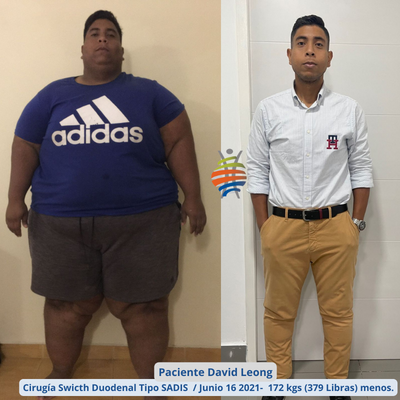
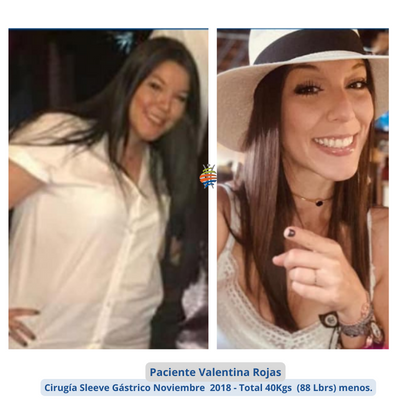
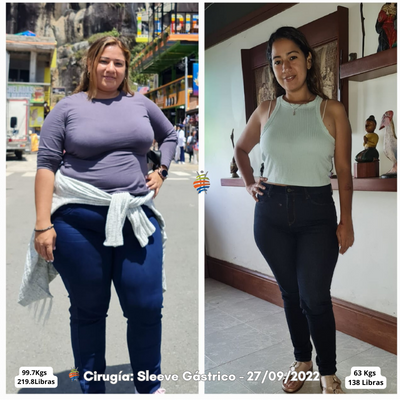
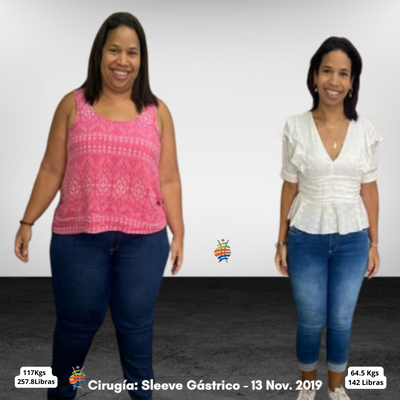

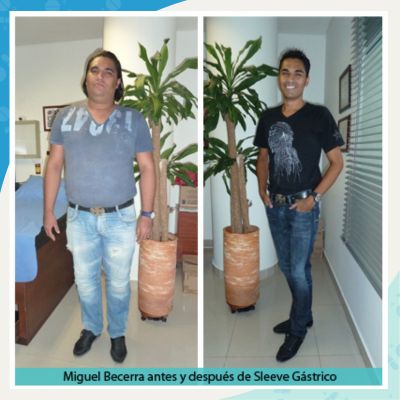
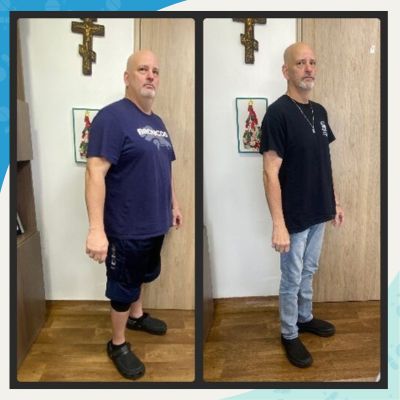
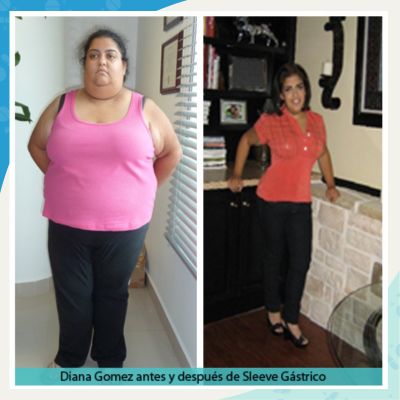

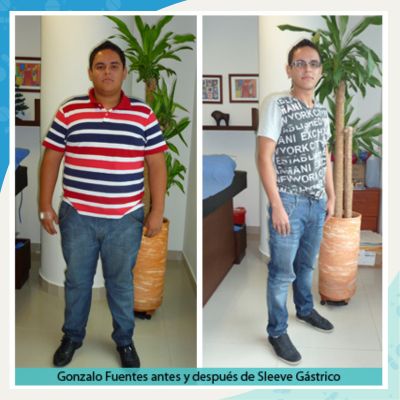


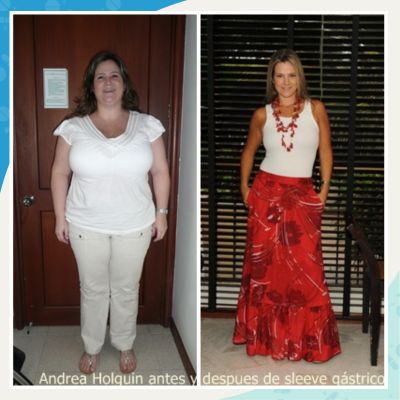
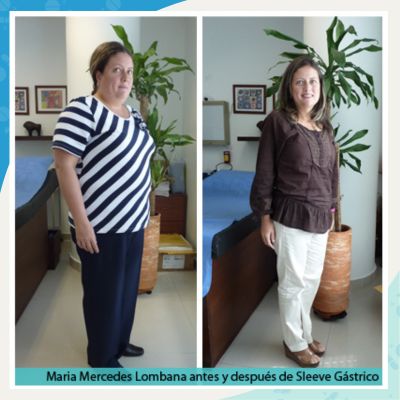
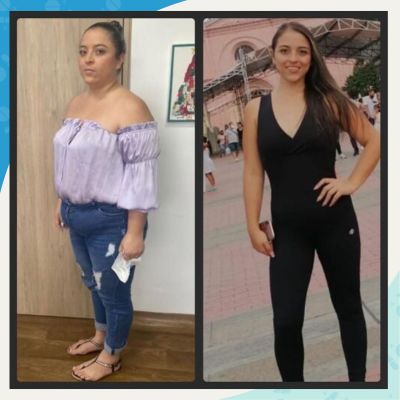
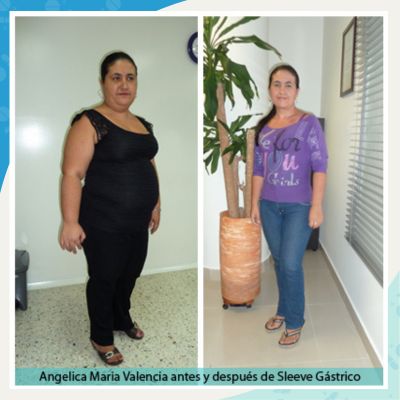
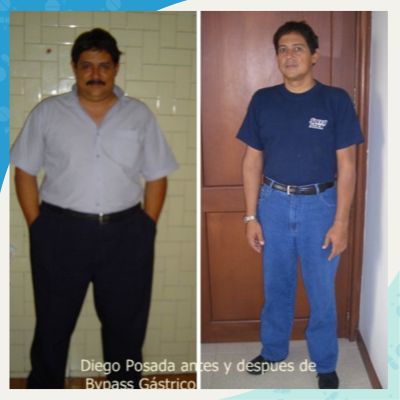
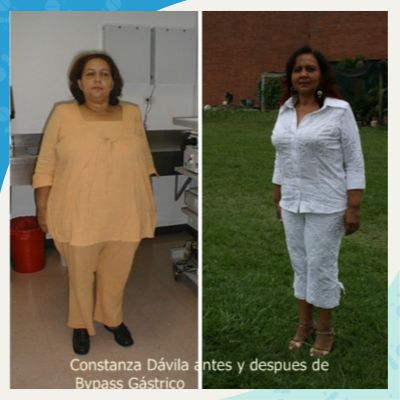
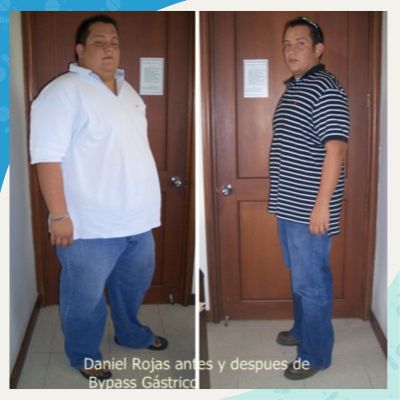
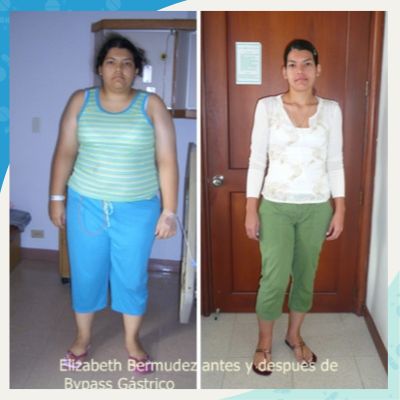
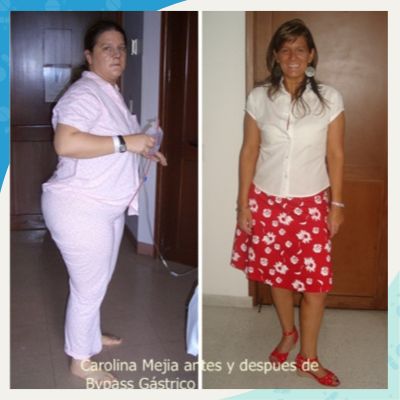
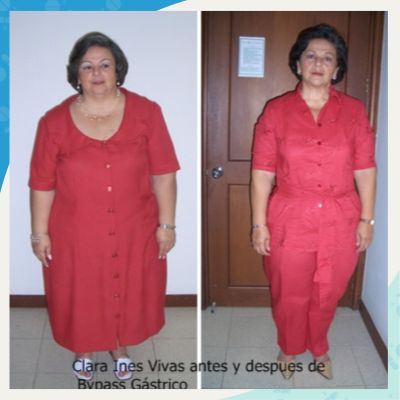
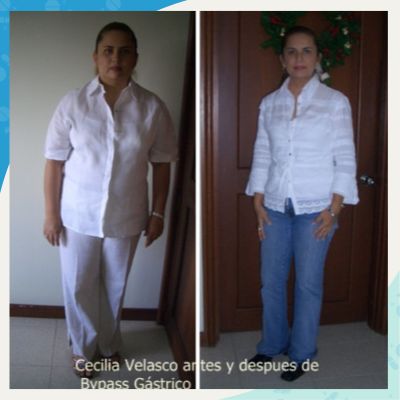
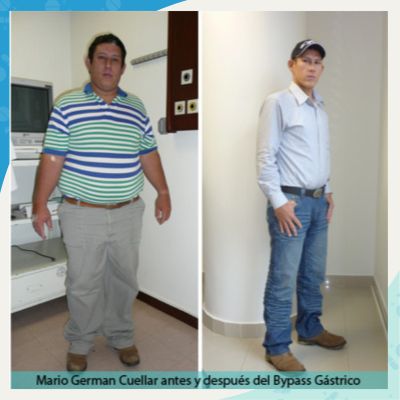
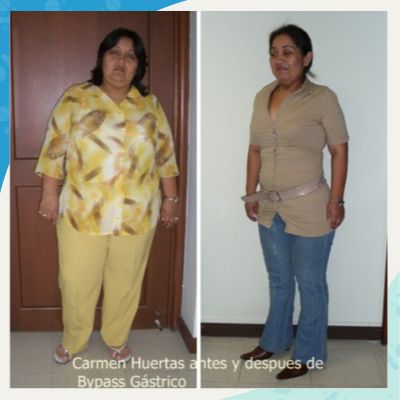
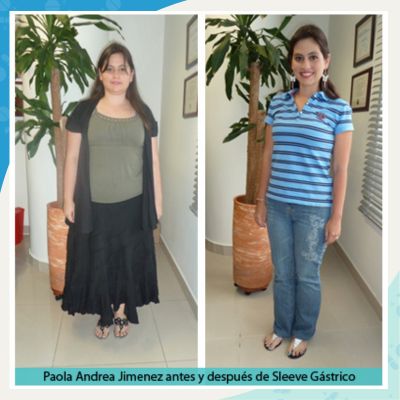
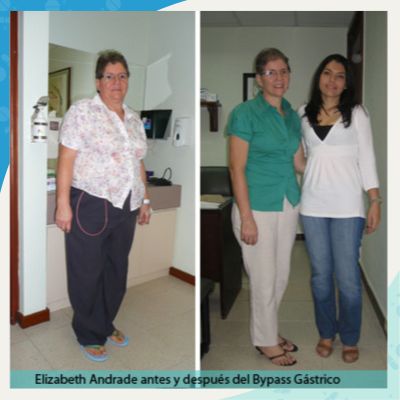


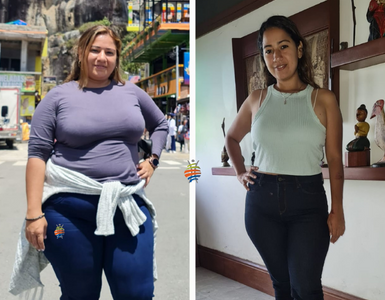
Cómo saber si una manga gástrica tiene las condiciones técnicas adecuadas para producir o ayudar a mantener una buena pérdida de peso?
Esta es una duda o inquietud frecuente entre los pacientes obesos que están buscando una solución para su problema de exceso de peso. En términos generales ambas cirugías representan una buena opción para el manejo de la obesidad, independiente de la severidad (no es correcta la afirmación de que el bypass sea una cirugía para los obesos más severos y el sleeve para los menos obesos). Ambas cirugías pueden conducir al paciente a una gran pérdida de peso si el paciente sigue las recomendaciones nutricionales y modifica algunos hábitos alimentarios. Es particularmente importante entender que para que una cirugía bariátrica funcione de manera adecuada y conduzca al paciente a una gran pérdida de peso, es necesario evitar al máximo el consumo de azúcar y de alcohol, independiente del tipo de cirugía que se realice. Esto hace referencia a evitar el consumo de helados, chocolate, bebidas dulces, sodas o gaseosas con azúcar, o alimentos con endulzantes naturales como la miel, panela, fructosa, agave, azúcar morena, etc.
Igualmente es importante evitar o aplazar el mayor tiempo posible el consumo de bebidas con alcohol. La razón de esta recomendación es que ninguna de las cirugías bariátricas tiene como propósito evitar que estos alimentos se absorban, por lo tanto, si el paciente los consume, estas calorías se van a absorber de manera normal y tienen un efecto de freno en la pérdida de peso, pudiendo afectar el resultado final del tratamiento. Esto es independiente del tipo de cirugía e independiente del tipo de dulce con calorías o del tipo de licor, todos pueden frenar la pérdida de peso si se consumen, especialmente si se hace tempranamente luego de la operación (durante el primer año). Esta recomendación de evitar el consumo de azúcar y licor es la misma si la cirugía es un Bypass gástrico, un sleeve gástrico o un Switch duodenal, en todos los casos debe evitarse para tener un buen resultado. Y de la misma manera, el consumo frecuente o abundante de azúcar o licor puede conducir a reganancia de peso con el paso del tiempo, en pacientes con cualquiera de estas cirugías.
Dieta antes de cirugía – es necesario perder peso antes de una cirugía bariátrica?
No es un requisito indispensable hacer una dieta especial ni tener una pérdida de peso determinada antes de una cirugía bariátrica. Este requerimiento ha sido cuestionado por asociaciones como la Asociación Americana de Cirugía Bariátrica y Metabólica ASMBS, quien en uno de sus pronunciamientos ha expresado que no es justificable retardar una cirugía bariátrica por el hecho de que el paciente no haya demostrado que puede perder peso o porque no se haya sometido a una dieta previa. Este tipo de manejo nutricional no es indicado de rutina y no ha demostrado tener beneficios significativos para el paciente en términos de mejorar los resultados de la cirugía. Por esta razón, no es necesario exigir de rutina a los pacientes que buscan una cirugía bariátrica que pierdan cierta cantidad de peso antes de una cirugía bariátrica.
A continuación se transcriben las recomendaciones y la conclusión de recomendaciones de la Asociación Americana de Cirugía Bariátrica y Metabólica con respecto a este tema, de manera textual y tomadas de su sitio www.asmbs.org (https://asmbs.org/resources/preoperative-supervised-weight-loss-requirement ) , al darle click a este vínculo puede leer la información relacionada de manera completa.
Recomendaciones ( Tomado textualmente de ASMBS Guidelines)
“ No hay datos concluyentes que soporten el beneficio de exigir al paciente una pérdida de peso antes de una cirugía bariátrica. Esta práctica puede contribuir a aumentar el desgaste del paciente, y causar demoras para la administración de un tratamiento que puede salvar la vida, y no debería ser una exigencia o requisito de rutina.”
No hay datos claros en la literatura quirúrgica o consenso en la literatura médica, que hayan identificado un régimen dietario previo ideal, un tipo de programa de pérdida de peso determinado o la duración de este antes de la cirugía, que sea óptimo para pacientes con obesidad clínicamente severa. Un proceso de información completo sobre lo que es la cirugía y la necesidad de cambios de hábitos alimentarios y de actividad, son la mejor herramienta de preparación para un proceso exitoso de cirugía bariátrica.
Los pacientes que buscan tratamiento quirúrgico para obesidad clínicamente severa deben ser evaluados basados en su Indice de Masa Corporal basal y sus condiciones comórbidas. Es importante revisar los hábitos alimentarios del paciente para identificar aquellos que deben modificarse para lograr un buen resultado de pérdida de peso.
Preguntas frecuentes
Para definir si una persona tiene problemas de obesidad o sobrepeso, lo más adecuado es determinar su índice de masa corporal (IMC). Este cálculo se hace teniendo en cuenta el peso y la estatura de la persona. Se considera que una persona tiene obesidad cuando su IMC está en 30 kg/m² o más. Si el IMC está por encima de 35 se considera obesidad severa y por encima de 40 se denomina obesidad mórbida. Para determinar su índice de masa corporal, visite la página principal y en la casilla de la derecha introduzca sus datos de peso y estatura. Al dar clic en calcular obtendrá su IMC. Recuerde seleccionar las unidades que utiliza, si es en metros y kilogramos o en libras y pies.
Son candidatos a cirugía de Bypass gástrico los pacientes que tienen un índice de masa corporal de 35 kg/m² o más. Los pacientes con IMC de 40 son considerados como pacientes que tienen obesidad mórbida, es decir, que la sóla obesidad, aún sin la presencia de otros problemas de salud, constituye una enfermedad que pone en peligro la vida del paciente.Con frecuencia estos pacientes presentan enfermedades asociadas, ocasionadas o agravadas por la obesidad, como la hipertensión arterial, diabetes, artrosis de rodillas y apnea del sueño, entre otras.
Cirugía bariátrica es una cirugía que se realiza con el fin de producir pérdida de peso en un paciente con problemams de obesidad. Es la especialidad de la cirugía dedicada al tratamiento de la obesidad por medio de intervenciones quirúrgicas. Existen varios tipos de cirugía bariátrica: Sleeve Gástrico o Manga Gástrica, Bypass gástrico , Derivación biliopancreática, y Banda gástrica, entre otras. La cirugía es el mejor tratamiento disponible en la actualidad para el manejo de la obesidad severa y mórbida, pues es superior a las dietas, los medicamentos y otras medidas utilizadas frecuentemente. La cirugía bariátrica no tiene objetivos estéticos, sino que busca mejorar la salud del paciente obeso, es decir, que es el tratamiento para la enfermedad denominada obesidad severa o mórbida.
La cirugía laparoscópica es un moderno método para realizar procedimientos quirúrgicos. Para la realización de estas operaciones, se utiliza un laparoscopio (telescopio delgado), conectado a una cámara de video especial, la cual transmite las imágenes a una pantalla de televisión. El laparoscopio se introduce al abdomen ó al tórax a través de una pequeña incisión (5-10mm) y el Cirujano Bariatrico o Cirujano Laparoscopico puede ver los órganos internos de manera muy clara. A través de pequeñas incisiones adicionales se introducen cánulas (pequeños tubos), que se utilizan para introducir instrumentos delgados y delicados con los cuales se efectuará la cirugía. De esta manera, el cirujano puede realizar la operación mirando en una pantalla de video, sin necesidad de efectuar incisiones grandes en la piel. Esto favorece la recuperación del paciente, pues las heridas de la cirugía son pequeñas y menos molestas que las heridas utilizadas en cirugías abiertas. En el caso de la cirugía laparoscópica, las heridas usualmente miden entre 5 y 10 mm.
Al momento de elegir una cirugía es importante tener presente que se deben lograr tres objetivos luego de la operación:
- Perder peso de manera significativa.
- No volver a ganar el peso perdido.
- Tener una buena calidad de vida.
La cirugía que permite lograr estos objetivos de manera más completa es el Bypass gástrico por laparoscopia. Esta es la cirugía más recomendable para la mayoría de los pacientes que tienen IMC entre 35 y 50 kg/m². Para los pacientes de masa corporal por encima de 50 kg/m² se recomienda la Derivación biliopancreática por laparoscopia, y para los pacientes con obesidad moderada, con IMC por debajo de 35kg/m², la cirugía de Sleeve Gástrico o Manga Gástrica representa una buena opción. La cirugía de Banda gástrica es poco recomendable, pues con frecuencia deriva en intolerancia a los alimentos, vómito frecuente y persistente, pérdida de peso insuficiente o nueva ganancia de peso. La cirugía de Sleeve Gástrico constituye una excelente alternativa a la banda, pues produce pérdidas de peso similares, con mejor tolerancia y mejor calidad de vida. Todos estos procedimientos se realizan por Cirugía Laparoscópica a y la elección del procedimiento a realizar depende del tipo de paciente y del grado de obesidad que este presente. Esta elección debe tomarse entre el Cirujano Bariatrico y el paciente, luego de una evaluación completa de los hábitos alimentarios y el estado de salud de este.
Si, la absorción de los medicamentos no se altera de manera importante luego de una cirugía bariátrica, sin embargo, es importante consultar con el médico que tipo de medicamentos toma el paciente para definir cuál es la mejor opción. Se pueden tomar medicamentos en forma normal para cualquier otro problema.
El licor es una fuente importante de calorías que no va a producir una sensación de llenura en el paciente sometido a Cirugía bariátrica, sino que va a ser rápidamente absorbido en el intestino. Al ser una fuente concentrada de calorías su consumo debe ser controlado, pues si se toma en exceso, puede producirse un freno en la pérdida de peso o una ganancia considerable de peso con el paso del tiempo.
La Cirugía bariátrica es el mejor tratamiento disponible hoy en día para el manejo de la obesidad severa y mórbida, pues con esta se logra una pérdida de peso significativa y permanente, sin embargo no es infalible. Puede presentarse un aumento de peso con el paso del tiempo cuando el paciente no sigue las recomendaciones respecto a su alimentación y sus hábitos de vida.Un consumo exagerado de dulces, helados, chocolate y licor puede producir nuevas ganancias de peso o frenar la pérdida de peso antes de lo esperado. Esto ocurre cuando el paciente se aleja mucho de las recomendaciones médicas, puesto que no es algo que suceda por consumo ocasional de estos alimentos.
Si, la absorción de los medicamentos no se altera de manera importante luego de una cirugía bariátrica, sin embargo, es importante consultar con el médico que tipo de medicamentos toma el paciente para definir cuál es la mejor opción. Se pueden tomar medicamentos en forma normal para cualquier otro problema.
La gran mayoría de nuestros pacientes no necesitan pasar a la Unidad de Cuidados Intensivos después de una cirugía bariátrica. El 99% de los pacientes son trasladados a una habitación normal y quedan en condiciones de sentarse en una silla fuera de la cama e inclusive empezar a caminar el mismo día de la operación, una vez hayan pasado los efectos de la anestesia. Cuando el paciente tiene una obesidad muy severa (índices de masa corporal mayores de 50 kg/m²), asociada a problemas graves de salud, puede ser necesario trasladar al paciente a la Unidad de Cuidados Intensivos, usualmente durante las primeras 24 horas después de la operación.
Cuando se realiza una cirugía bariátrica la hospitalización es usualmente de una noche. El paciente se hospitaliza el día de la operación y permanece en la clínica hasta el día siguiente.
Usualmente la incapacidad es de 8 días a partir del día de la cirugía. Sin embargo, la idea es que el paciente esté activo lo más pronto posible y que evite al máximo el reposo en cama. Si el paciente desea vincularse a sus actividades normales, antes de transcurridos los 8 días, puede hacerlo sin problemas (esto sucede con frecuencia).
La cirugía de Sleeve Gástrico o Manga Gástrica es hoy en día la cirugía más utilizada para el manejo de la obesidad en la mayoría de los pacientes, pues ha mostrado ser altamente efectiva, produciendo una pérdida de peso muy similar a lo observado con el bypass gástrico, siendo una cirugía de menor complejidad. El bypass gástrico continúa siendo una cirugía efectiva y segura, sin embargo, es una operación en la que se hacen mayores cambios en la anatomía del intestino y se requiere del uso permanente de vitaminas y calcio posterior a la operación. Por esta razón, hoy en día los pacientes prefieren la cirugía de sleeve gástrico, la cual permite una excelente pérdida de peso en la mayoría de los pacientes. En algunos pacientes con enfermedades asociadas, puede ser preferible el uso de la cirugía de bypass gástrico. Esta situación debe analizarse de manera individual con cada paciente.